

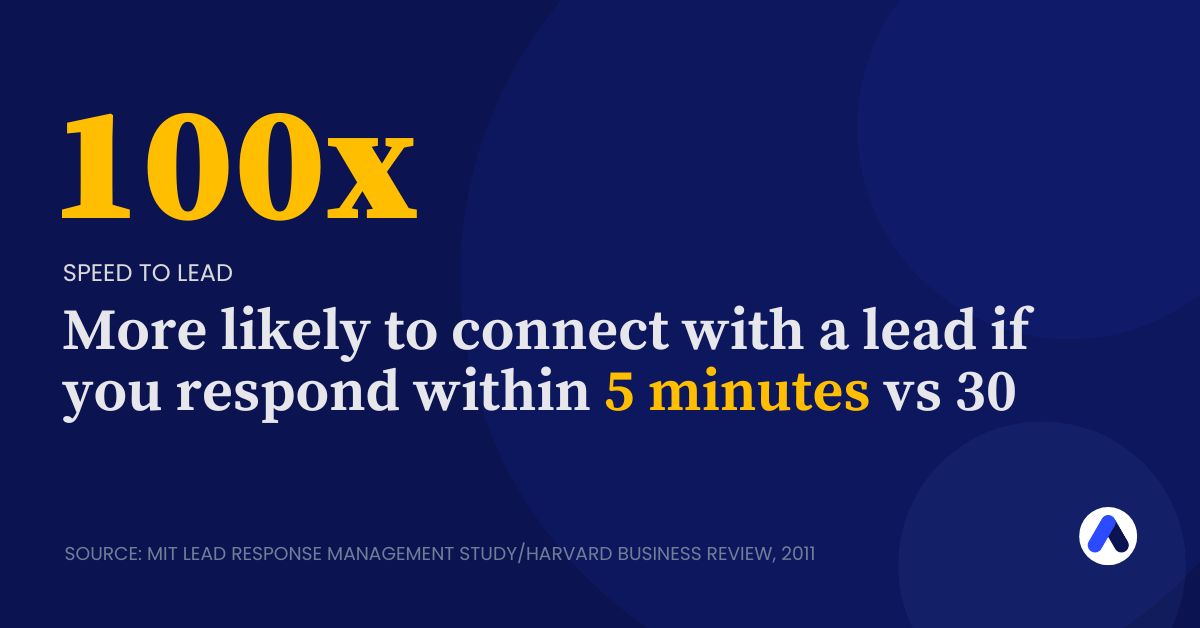
Respond to a new enquiry within five minutes and you’re 100 times more likely to make contact than if you wait 30 minutes. Wait an hour and that probability drops by a factor of ten.
Those figures come from an MIT study of over 15,000 leads and 100,000 call attempts, later published via Harvard Business Review. They’ve held up across industries for more than a decade. And they apply just as much to a psychology clinic in Brisbane as they do to a B2B sales team. Arguably more, given who’s making the call.
For allied health, the person filling out that contact form or leaving that voicemail isn’t comparing vendor options. They may have spent weeks working up the courage to ask for help. That changes what a slow response actually costs.
The demand is there. The system isn’t keeping up.
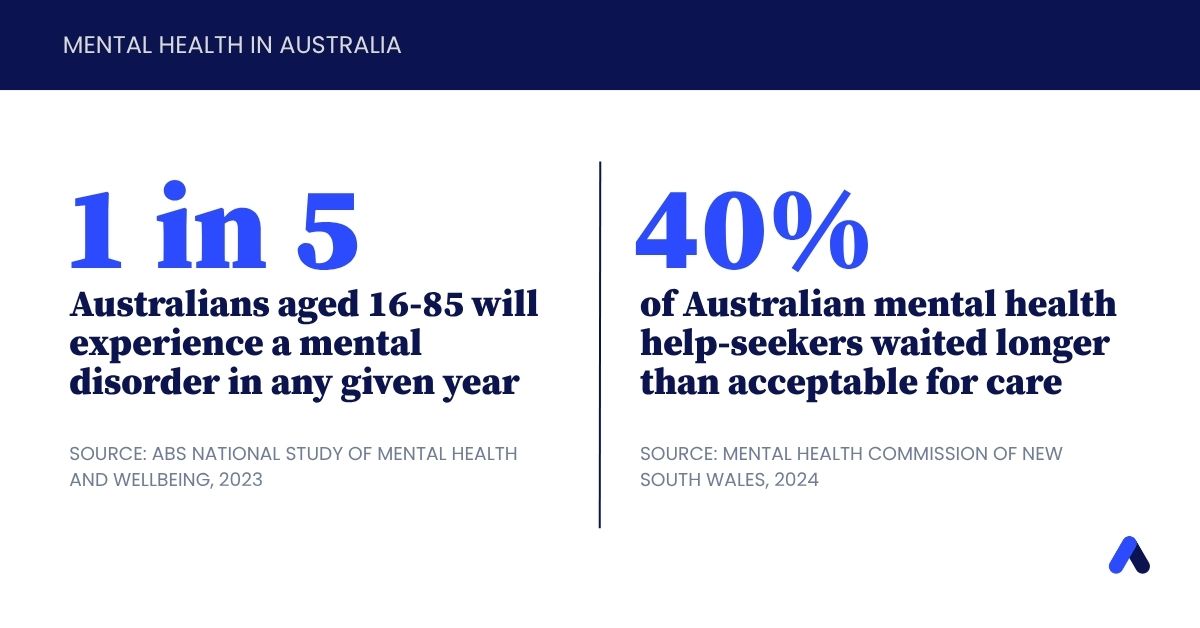
According to the ABS 2023 National Study of Mental Health and Wellbeing, around 1 in 5 Australians aged 16–85 will experience a mental disorder in any given year. The AIHW estimates that Australians spent approximately $13.2 billion on mental health-related services in 2022–23. Demand isn’t the problem.
But responsiveness is. Up to 40% of Australian mental health help-seekers reported waiting longer than acceptable for care, according to the Mental Health Commission of New South Wales. Before the pandemic, the median wait time for a psychologist appointment in Australia was already 34 days. During the pandemic, 88% of psychologists reported their wait times had increased, with half of all clients waiting more than three months for a first session.
Against that backdrop, a person who finds a clinic online and submits an enquiry is often doing so because they need help now. That window of active engagement doesn’t stay open for days. It closes in minutes.
What actually happens when someone reaches out
I see a wide range across the clinics I work with. Some practices have a full-time admin person who can pick up the phone immediately or call back a form enquiry within minutes. Those clinics convert new enquiries at a noticeably higher rate. Others rely on a part-time admin team, someone available only a few days a week, handling a dozen other responsibilities alongside inbound enquiries.
The gap in outcomes between those two situations isn’t subtle.
And then there’s a third scenario: the solo or small practice where calls go straight to the treating practitioner. Someone who is almost always in a session when the phone rings. I work with an exercise physiologist in this exact situation. Every call goes to their mobile, and they never answer it, because they physically can’t. Every missed call is a potential client who moved on before the callback came.
The problem isn’t that these clinic owners don’t care. They’re busy delivering care. But the structure isn’t set up to protect the enquiry.
What’s going through that person’s mind
When someone reaches out to a psychology clinic, they’ve often already spent time talking themselves into it. They’ve googled, read the website, convinced themselves this clinic might be the right fit. They’ve picked up the phone, or finally hit submit on the form.
If no one answers, or if two days pass without a response, a couple of things happen. First, there’s a quiet sense of being let down. The clinic that promised they care didn’t answer when it mattered. Second, and almost immediately, that person moves on. They call the next clinic on the list. Whoever answers first gets the booking.
In the mental health space particularly, that moment of reaching out is often fragile. The person isn’t in a position to wait around. The clinic that doesn’t respond quickly isn’t just losing a conversion. It’s failing at the very first point of contact with someone who needed help.
A case that made this very clear
I worked with a psychology clinic in Melbourne. Well-established, good practitioners, a Google Ads campaign generating more than 30 qualified leads per month. By any reasonable standard, the top of the funnel was working.
But the leads weren’t converting. The clinic had a part-time admin person who was getting back to form enquiries anywhere from one to two days after submission. By the time they called, the person had already spoken to two other clinics. Most weren’t interested in hearing back at that point.
Eventually, the clinic concluded that the campaign wasn’t working and that the leads were low quality. My conclusion was different. The leads were fine. What was broken was the follow-up process. Thirty qualified people expressing interest every month, and most of them slipping through because no one called back fast enough.
That’s not a marketing problem. It’s an operations problem wearing a marketing disguise.
What good actually looks like
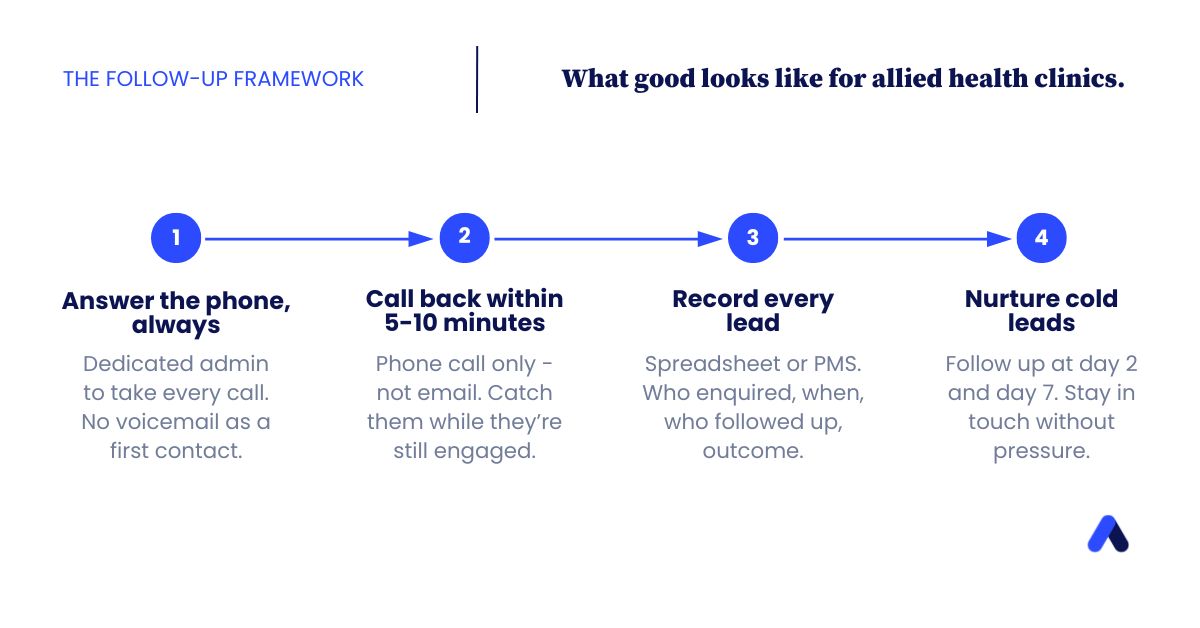
The five-minute rule sounds aggressive in a healthcare context, but it’s the right target. That’s when the person is still sitting at their desk having just submitted the form. They haven’t moved on yet.
Here’s what I’d recommend to any clinic running paid search or managing inbound enquiries.
Someone needs to answer the phone, always. Not a voicemail system that promises a callback — a person. When someone calling a psychology clinic hits voicemail, a meaningful percentage won’t call back. They’ll call elsewhere. Phone coverage needs to be treated as a non-negotiable.
Form enquiries should trigger a phone call within five to ten minutes. Not an email response — a phone call. Email feels passive and creates another step before a conversation happens. When admin calls within minutes, they catch the person while they’re still engaged, walk them through what to expect, do a brief triage, and get them booked. That sequence converts at a dramatically higher rate than the email-and-wait approach.
Every lead needs to be recorded. Whether that’s a simple spreadsheet or a practice management system, it doesn’t matter much at the start, as long as it exists. Who enquired, when, who called them back, what happened. Without that record, there’s no accountability and no ability to spot when leads are going cold.
Cold leads aren’t dead leads. Someone who submitted a form and didn’t respond to a first callback is still someone who expressed genuine interest. A follow-up text or email two days later, then again at a week, keeps the door open without being intrusive. In mental health, a person’s readiness to engage can shift quickly. Being the clinic that stayed in touch, without being pushy, often makes the difference.
Lead generation is only half the equation
This is something I come back to constantly with clinic owners: the marketing spend only works if the follow-up process supports it. Generating 30 leads a month and converting five of them is not a lead quality problem. It’s a speed-to-lead problem.
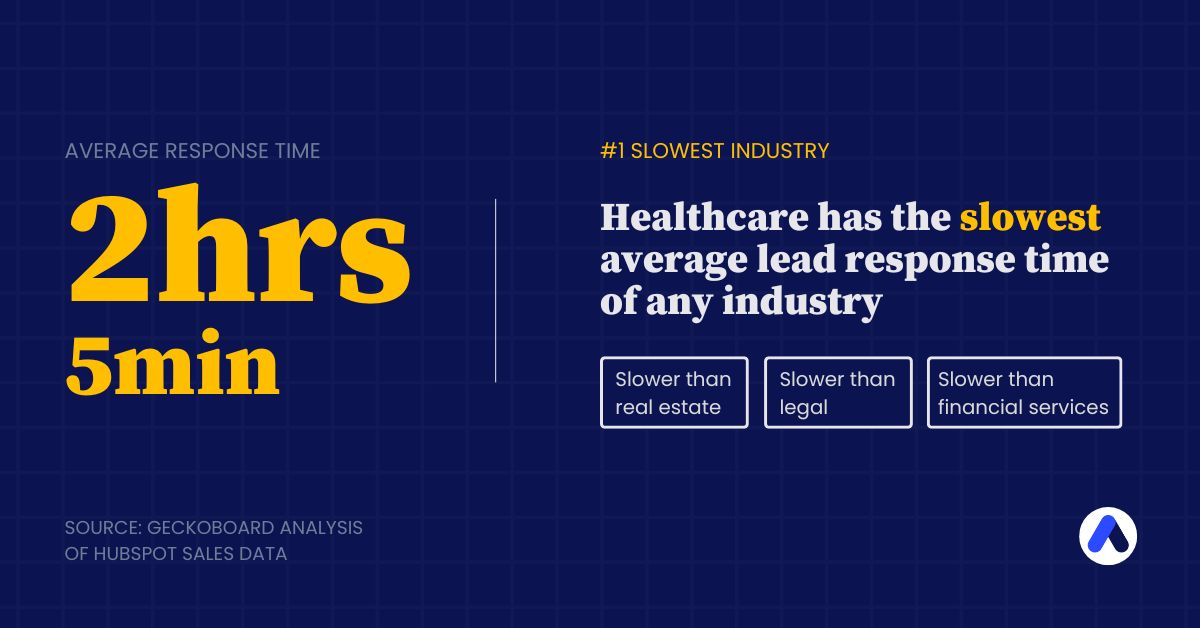
According to international data from Geckoboard’s analysis of HubSpot sales records, healthcare has the slowest average lead response time of any industry, at 2 hours and 5 minutes. That’s not slightly below par. It’s the worst-performing sector across every industry measured, including real estate, legal, and financial services. There’s no reason to believe Australian allied health clinics are an exception.
Allied health clinics are not B2B companies. The comparison isn’t perfect. But the psychology of the inbound enquiry is identical: someone actively seeking help, in the moment, ready to talk. They want to hear from someone quickly. The clinics that do that consistently fill their calendars. The ones that don’t wonder why their marketing isn’t working.
What to do now
Start with an honest assessment: how long does it actually take your clinic to respond to a new enquiry? Not the ideal answer. The real one. Check your last ten form submissions and see when someone called them back.
If the answer is hours or days, that’s the priority. Not a better landing page, not a different keyword strategy. The follow-up process is what needs fixing first.
If you want to know what a full client acquisition system looks like, one that accounts for both the lead generation and the follow-up, that’s exactly what a Clinic Growth Diagnostic is for. We look at your current situation, identify where the gaps are, and tell you what we see.