The Marketing Flywheel: Why most allied health clinics quit marketing right before it starts working

Here’s a pattern I see constantly.
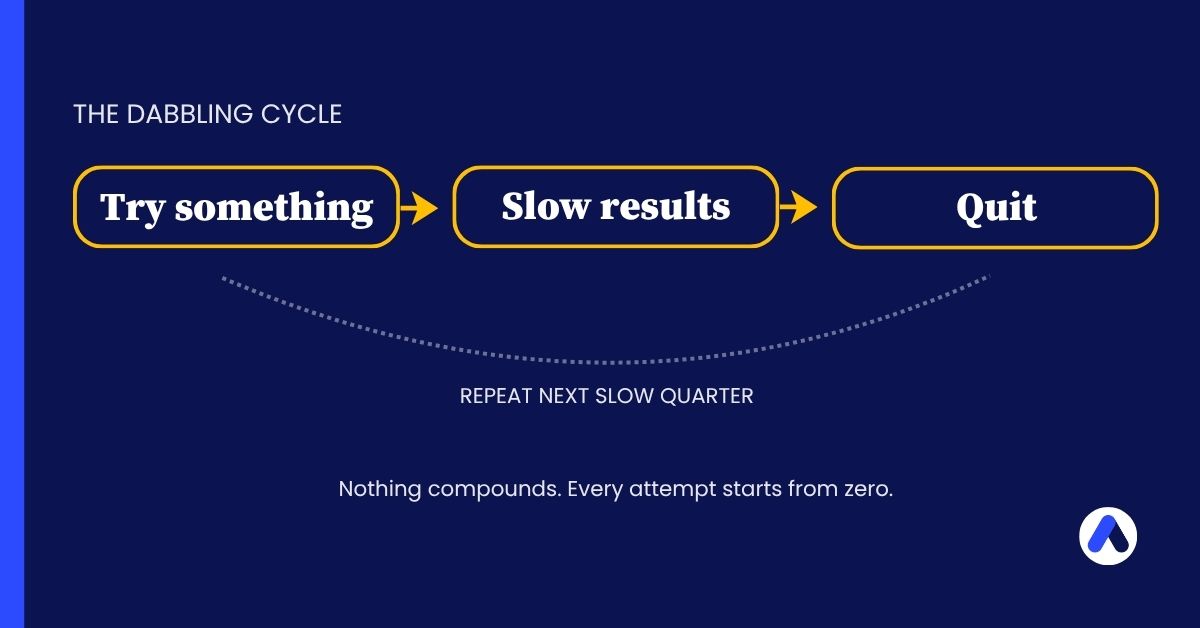
A practice owner decides it’s time to do something about their marketing. They post on Instagram for a few weeks. They write a couple of blog articles, hoping to pull in Google traffic. They run some ads — either themselves or through a generalist agency — and give it a couple of months before deciding it doesn’t work.
Then they go quiet. Back to waiting on GP referrals and word of mouth. Until the next slow patch, when the cycle starts again.
Almost every clinic owner I speak to has been through a version of this. And almost none of them realise that the problem wasn’t the tactics. It was the stopping.
The mistake hiding in plain sight
Jim Collins spent years studying companies that achieved extraordinary results. He expected to find turning points — bold bets, breakthrough moments, a single decision that changed everything.
He didn’t find that. What he found was relentless, unglamorous consistency. The same effort, the same direction, compounding quarter after quarter until the momentum became impossible to ignore. He called it the flywheel.
Marketing works exactly the same way.
The clinics winning at this aren’t the ones with the most sophisticated strategy. They’re the ones that committed to a system and kept going. Not out of blind faith, but because they had a structured approach and trusted the process long enough to see it compound.
According to a 2023 survey of 700 Australian SMEs by the National Retail Association, only 11% of small businesses fully embrace digital marketing strategies. The majority dabble. They try things, see slow results, and stop. Then the window closes, and so does the opportunity.
What the flywheel actually looks like for an allied health clinic
Let’s take this out of business book language and into something practical.
For a psychology, physio, or speech pathology clinic, the flywheel isn’t about content calendars and brand awareness campaigns. It’s about showing up consistently in the places your ideal clients are already looking — and making sure that when they find you, there’s a clear path to getting in touch.
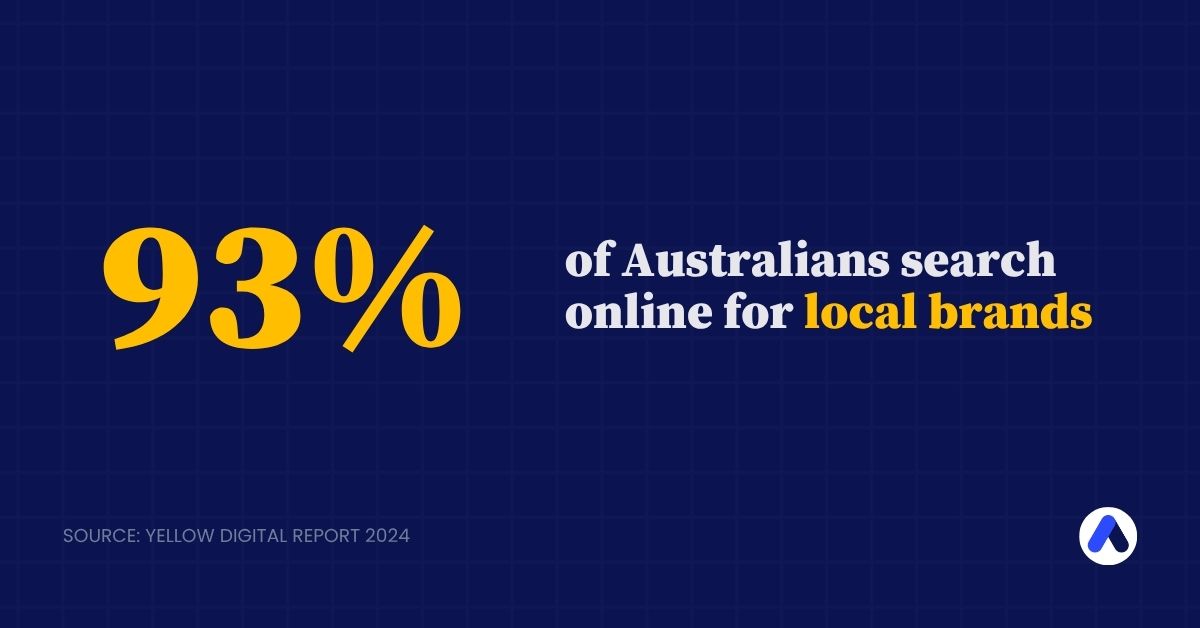
The Yellow Digital Report 2024 found that 93% of Australians search online for local brands. Your potential clients are searching. The question is whether you’re showing up.
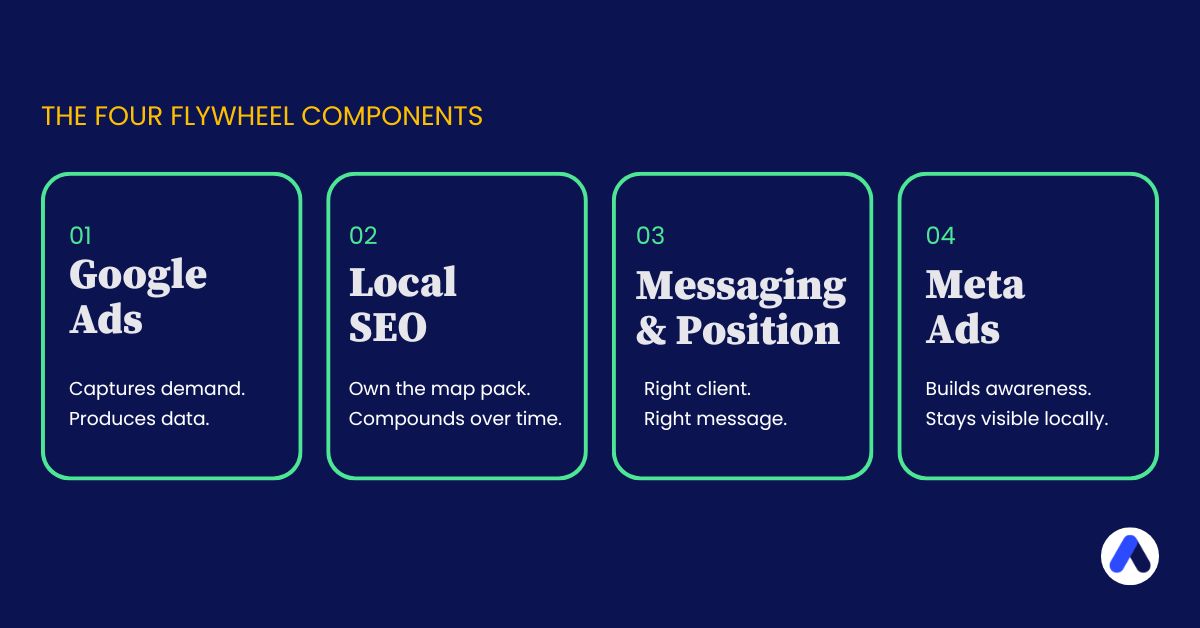
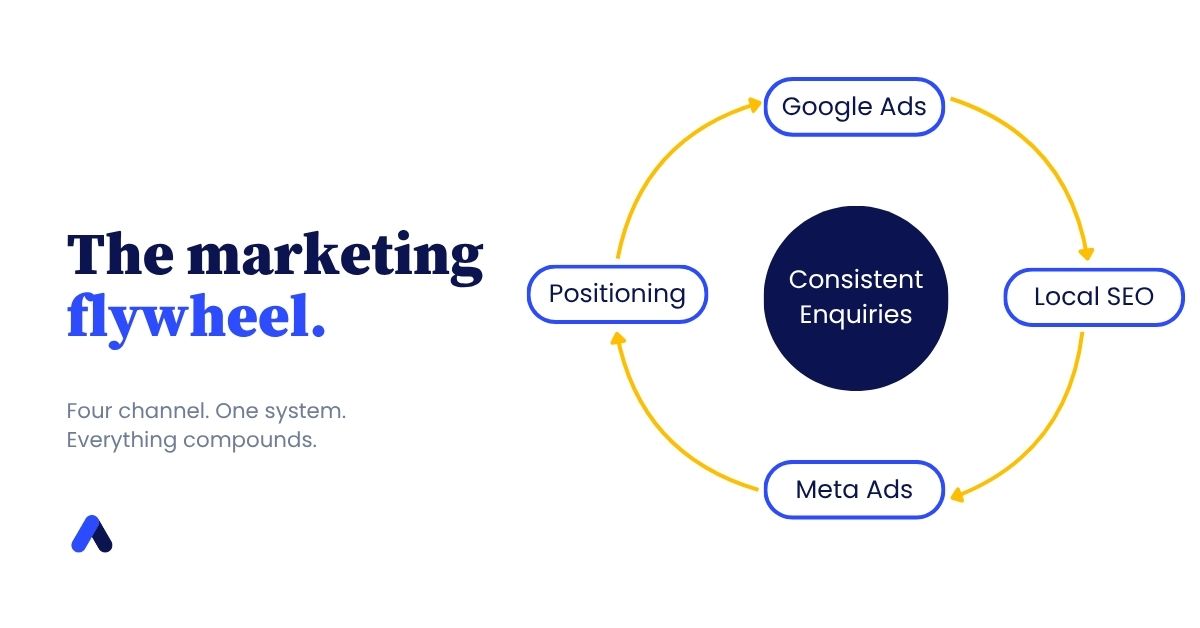
Four components compound the most:
Google Ads. This is the engine that gets things moving. Run well, Google Ads produce leads within days of going live, because you’re showing up at the exact moment someone is searching for what you offer. But the real value of starting here isn’t just the early leads. It’s the data. Within the first few months, you learn which keywords convert, which pages do their job, and who’s actually enquiring. That data feeds everything else.
Local SEO and the Google Maps Pack. When someone searches “psychologist near me” or “speech pathologist [suburb]”, the three businesses in the map pack get the lion’s share of clicks. Getting there takes consistent work, but it moves faster than most clinic owners expect. A well-optimised Google Business Profile can show meaningful movement within a month. Pair that with keyword data from your Ads campaigns and you’re not guessing what to focus on. You know.
Messaging and positioning. This is the piece that gets overlooked because it doesn’t feel like marketing. But it’s often what makes everything else work harder. When a clinic gets clear on who their ideal client is and speaks directly to them, enquiry rates go up without touching a single channel. The same website, the same ads, the same budget — just sharper language, talking to the right person. Most clinic owners have never done this work properly. For us, it’s table stakes.
Meta ads. Where Google Ads captures active demand — people already searching — Meta builds it. Consistent local visibility in someone’s feed, month after month, in the community you’re trying to own. It’s not a fast-return channel, but it compounds. The clinic that’s been showing up in someone’s feed for six months has a head start when that person finally decides to make a booking.
Why the flywheel stalls
Two scenarios play out all the time. Both are familiar.
The first: a clinic owner tries to handle marketing themselves. They post, they write, they run some ads. Results are slow. Confidence drops. Without any visibility into what’s working, it starts to feel like wasted effort. So they stop.
The second: they pay an agency. A couple of months in, the results aren’t there. They’re spending $2,000 to $2,500 a month with nothing to show for it — or at least nothing they can point to. So they pull the pin.
Both outcomes have the same root cause. No system, and no attribution. They don’t know what’s working because nobody built the infrastructure to track it.
The same NRA research found that only 29% of Australian SMEs have implemented an email marketing strategy, with SEO, social, and paid channels underutilised across the board. It’s not a resources problem. It’s a systems problem. Clinics are investing in individual tactics without connecting them into anything that compounds.
The other thing that kills momentum is treating channels in isolation. Running ads without touching the website. Optimising the Google Business Profile without thinking about what happens when someone lands on the page. Channels doing their individual jobs, but not reinforcing each other.
What it looks like when it works
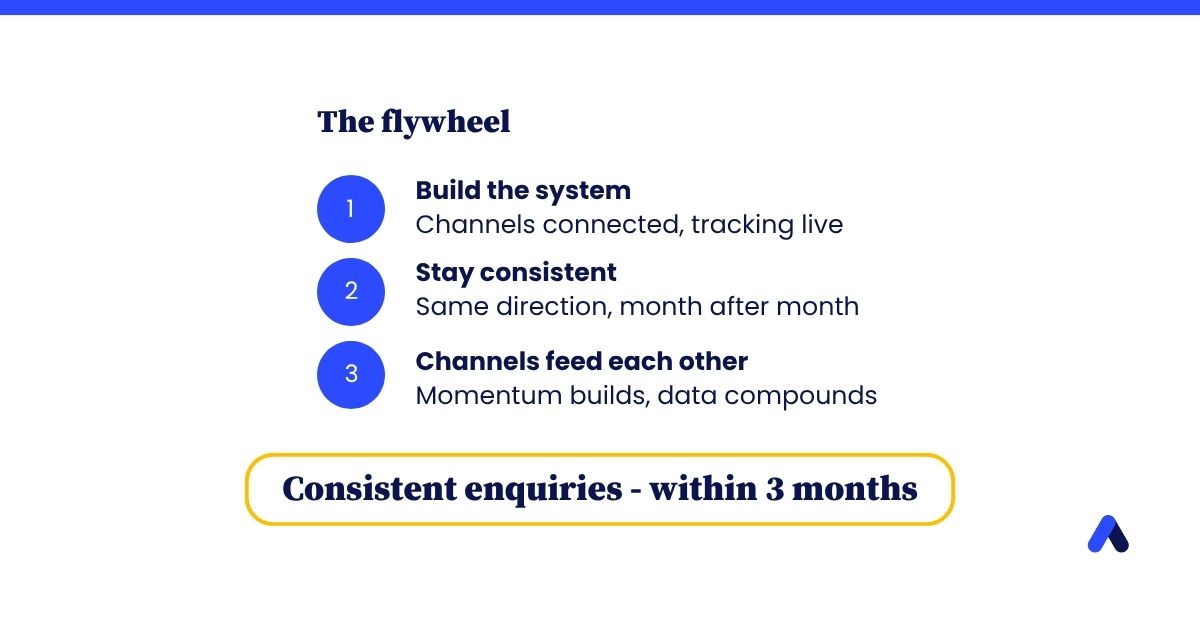
When the system is running and the clinic has stayed the course, the signs are straightforward. The phone rings more. Website enquiries come through more consistently. The quiet months get less quiet.
Despite the clear opportunity, 55% of Australian brands still haven’t claimed their Google Business Profile listing, and only 42% have optimised for local search at all. For clinics that do the work consistently, the competitive gap is significant.
Typically, a well-structured system across Google Ads, local SEO, and positioning starts producing consistent enquiries within three months. That timeline assumes the channels are connected properly, tracking is set up from day one, and the messaging has been refined to speak to the right person.
With 4 in 10 Australians accessing at least one Medicare-subsidised allied health service in 2024-25, the demand is there. The clinics that will capture a consistent share of it are the ones that show up reliably, in the right places, with the right message.
The practices that get there fastest have one thing in common: they stopped treating marketing as a series of experiments and started treating it as a system. They committed, they tracked, and they let it compound.
When EP360 Exercise Physiology committed to the system, their website traffic increased by 280% and weekly leads grew from one to more than 25 per month. Queensland Osteopathic Clinic saw a 45% increase in client bookings within four months — at an average acquisition cost of $22 per new client. Neither result came from a single tactic. Both came from channels working together, consistently, over time.
The question worth sitting with
If you’ve been through the cycle — tried a few things, got inconsistent results, pulled back — the honest question to ask is whether you’ve actually given a system enough time and structure to work, or whether you’ve been dabbling.
Dabbling feels productive. It isn’t. A post here, a blog there, two months of ads — none of it builds on itself.
A system does.
If you’re not sure whether what you currently have qualifies as a system or a collection of tactics, that’s worth looking at properly. A Clinic Growth Diagnostic is a structured conversation where we examine how new clients are finding you, where your online visibility is strong and where it’s weak, and whether there’s a real acquisition engine in place.
If there isn’t, we’ll show you what building one looks like.
Book a Clinic Growth Diagnostic